The Night Shift Your Cylinder Deserves: Off-Peak Hot Water Without Guesswork
Photo: Tomwsulcer, CC0, via Wikimedia Commons
The airing cupboard is where British homes keep their most misunderstood appliance. The immersion heater is usually either left on permanently, switched on twenty minutes before a shower and then forgotten, or turned off entirely in a fit of energy-saving enthusiasm that lasts until the first cold Sunday bath.
None of those is a plan. But a plan is not hard to build, and the savings are real — especially if you are on an off-peak tariff and still heating your water at teatime rates.
How the cylinder actually works
Most UK vented and unvented cylinders have two immersion elements. The long one sits at the bottom and heats the bulk of the tank. The short one sits near the top and provides a quick boost of a few dozen litres without heating the whole cylinder.
That distinction is the whole game. Bottom element in the cheap window, top element only when somebody has used up the hot water and needs more. Set up like that, a well-insulated cylinder will hold usable hot water well into the following evening.
Know your window
Economy 7 style tariffs give you a fixed block of cheap hours overnight, typically seven, though the exact times depend on your region and meter. Newer smart tariffs work differently, with shorter or shifting cheap windows that you can see in an app.
Either way, the principle is the same: find out precisely when your cheap hours fall. It is on your bill, on your supplier's app, or on the meter itself. Do not assume midnight to seven — plenty of areas run different clocks, and a timer set an hour out is a timer heating at full price.
Timers: mechanical, digital, smart
A mechanical timer is cheap, simple and loses its settings the moment the power blips. A digital timer with a battery backup holds its programme and gives you two or three on/off periods a day. A smart timer lets you change the schedule from your phone and, on some tariffs, align with the cheap window automatically.
For most households, a decent digital timer is the sensible middle. Fit it at the local isolator so the whole element is switched, not just the supply to a plug-in adaptor.
A simple starting programme for a two-adult household with a morning shower habit: bottom element on for the last three hours of the cheap window, off by 7am. Top element available on a boost switch, used sparingly.
The thermostat question
Cylinder thermostats are usually set between 60°C and 65°C. That range is not arbitrary — water stored at 60°C or above controls the risk of legionella bacteria in a tank that is not used constantly. Below that, you are relying on regular use to keep the cylinder turned over.
Turning it up to 80°C to 'get more hot water' does not work. The tank holds the same volume. You just store it hotter, lose more heat through standing losses, and increase the scald risk at the tap. If your hot water runs out too fast, the answer is a better schedule or better cylinder insulation, not a higher setting.
In hard water areas, scale on the element is the usual culprit. A scaled element takes longer to heat the same water, which shows up on the bill long before it shows up as a fault.
The safety checks worth doing once a year
An immersion circuit is usually 2.5mm² twin and earth on a 16A or 20A protective device, feeding a 20A double-pole switched spur with a neon indicator. A 3kW element draws about 13A. All of that is modest and completely safe — when the parts are sound.
What to look at:
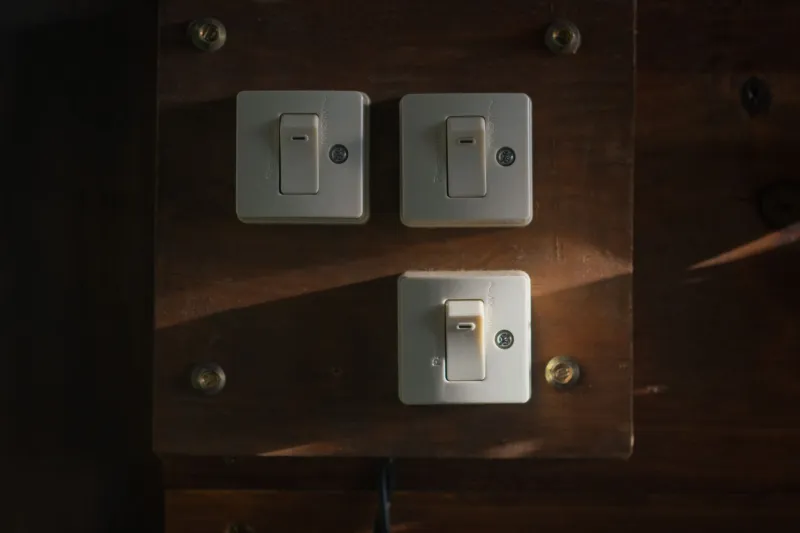
- The switch. Any browning, scorching, buzzing or warmth at the spur means stop using it and get it checked. Loose terminations at the isolator are a common cause of overheating.
- The cable. Look for damage, heat discolouration or a cable that has been squashed behind the cylinder.
- The RCD. If the circuit trips when the element runs, the element is the likely suspect, not the board.
- The cylinder earth. The cylinder should be earthed through the circuit's protective conductor, and main protective bonding to the incoming pipework should be intact.
- The element. A healthy 3kW element reads around 18 to 19 ohms across its terminals. A very different reading, or a reading to earth, means it is on the way out.
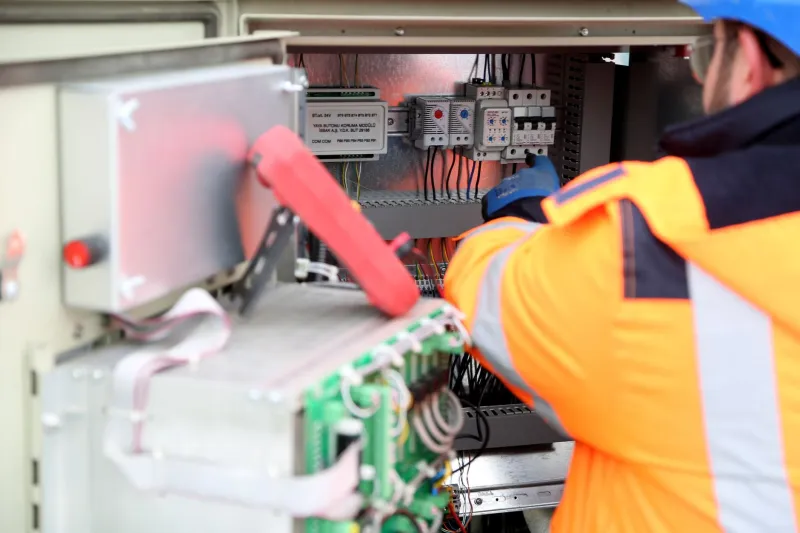
Do not dismantle an immersion heater unless you are competent to do so. The checks above are visual, and the last one needs a multimeter and the circuit dead.
Signs the element is failing
Lukewarm water despite the timer running. A breaker that trips when the element energises. Kettling or rumbling that has got louder over months. Discoloured water when you first run the hot tap. Any of those point at scale, a failing element or a failing thermostat, and all three are cheap to fix compared with the electricity wasted by a struggling heater.
The same goes for the timer. A timer that has stopped switching, or a boost switch that stays on permanently, will quietly undo every calculation you did about off-peak savings.
Insulate the cupboard, not just the cylinder
A cylinder jacket is a one-off purchase that pays back in a heating season or two. So does lagging the first couple of metres of hot pipe out of the top of the tank. The airing cupboard door being left open in winter is doing you no favours either, since half the point of the cupboard is that it holds warmth around the pipework.
One caution: never block the ventilation around the cylinder and never box in an immersion heater so the switch becomes unreachable. You need to be able to isolate it in a hurry.
When to call an electrician
Fitting a timer at the isolator, replacing a damaged spur, checking the circuit after an element change, or investigating an RCD trip on the immersion — all competent, all worth doing properly. Most of the annual saving comes from the schedule, and the schedule only works if the hardware underneath it is sound.