Behind the Cooker Switch: What an Old Cooker Point Can Actually Feed

Photo: induction hob kitchen worktop close up modern UK kitchen, via img.freepik.com
You have picked the hob. The kitchen fitter has been round. Then someone says the words 'the cable will need upgrading' and the price goes up by a figure with four digits in it before a single worktop has been cut.
Sometimes that is completely correct. Quite often it is not. The cooker point is one of the most over-specified and under-understood circuits in a British home, so it is worth knowing what the electrician is actually looking at.
What normally sits behind the switch
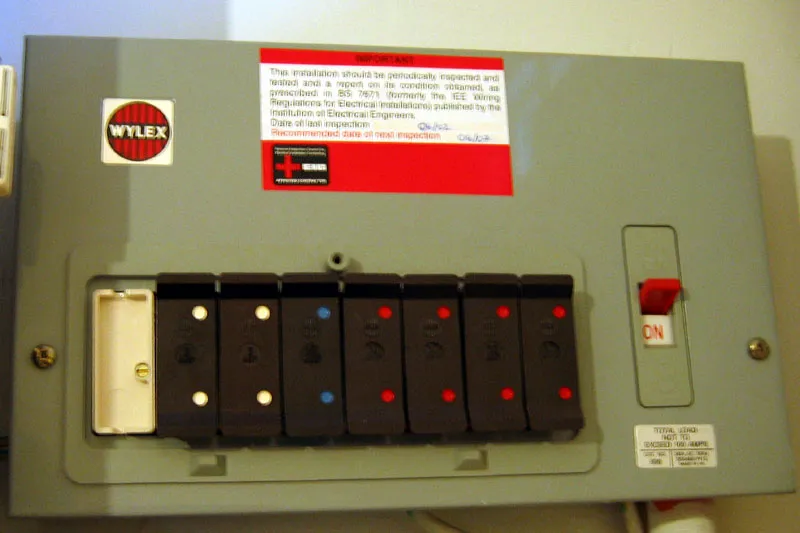
In a typical post-1980s UK kitchen, the cooker circuit is a 6mm² twin and earth cable running direct or in conduit from the consumer unit to a 45A double-pole cooker control unit on the wall. The control unit often has a 13A socket built into the plate. The circuit is usually protected by a 32A MCB, sometimes a 30A fuse in an older board.
Older houses vary widely. You might find:
- 4mm² cable, which is small for a modern hob
- Rubber-insulated cable, a red flag in any era
- Aluminium conductors, rare but not unknown
- A circuit with no circuit protective conductor, meaning the switch plate is not properly earthed
- An isolator smaller than the circuit it serves
- Green goo at the terminations — the plasticiser breakdown that plagues some 1970s cable
That is the part that genuinely matters. Cable size is arithmetic. Condition is judgement.
Induction hobs do not draw what people assume
Here is the useful number. A five-zone induction hob might be rated 7.2kW. At 230V that is about 31A. It sounds like it needs a supply the size of a small substation.
It does not, because no one uses every zone on full power simultaneously, and the standard diversity calculation recognises that. The usual approach for a household cooker is to allow the first 10A in full, then 30% of whatever is left, plus 5A if the control unit incorporates a socket.
For that 7.2kW hob: 10A plus 30% of 21A is about 16A. Add 5A for the socket and you are near 21A. A 32A MCB on a 6mm² cable covers that comfortably, and 6mm² clipped direct carries about 47A — considerably more when you account for the derating that applies in insulated walls.
So an old 6mm² feed, in good condition, is usually perfectly able to run a modern induction hob. The maths almost never fails. The cable does.
Where it goes wrong
Three things turn a straightforward swap into a rewire.
The cable is damaged or undersized. If it is 4mm² or rubber, or has been clipped too tight, crushed behind plaster or got wet in a wall, replace it. No calculation saves a poor conductor.
The route is too long. Voltage drop matters more on long runs. A detached garage kitchen with forty metres of cable is a different conversation from a terrace with eight.
The manufacturer says otherwise. Some hobs specify a supply of 32A or 40A, or require a particular cable size. Manufacturer instructions take priority over any rule of thumb, so read the manual before agreeing anything.
The isolator and the accessories
A 45A double-pole switch is standard and fine for most domestic hobs. What is not fine is an isolator with heat damage, a switch that has been painted over, or a plate with a socket that has clearly been carrying a kettle, a microwave and a toastie maker at the same time.
If the hob has a socket on the plate, factor in the extra 5A in your diversity sum. If the socket is not needed, ask for a plate without one — fewer things to go wrong, and one less load to allow for.
What about RCD protection
Modern consumer units usually protect cooker circuits with a 30mA RCBO, which is a sensible default. A hardwired cooker is not always required to be RCD-protected by the regulations, but it commonly is, and it is certainly not a problem.
The nuisance case is a shared RCD covering half the house. If the hob has an earth leakage fault, everything on that side goes dark. An EICR will tell you how the board is arranged before you find out at dinner time.
The honest checklist
Before accepting a rewire quote, ask for these answers:
- What size and type is the existing cable, and how was it established?
- What is the protective device rating, and does the diversity calculation support the new hob?
- What is the condition of the cable at both ends, including at the consumer unit?
- Is the existing isolator correctly rated and undamaged?
- Is the circuit on RCD protection, and how is that arranged?
- What does the hob manufacturer specify?
If the answers are '6mm², 32A, good condition, connected properly, yes, and 32A supply required', then reusing the point is reasonable and a responsible electrician will say so.
If the answers include 'we cannot tell without opening it up', that is not evasion — it is honesty. The truth about a cooker point lives behind the accessory plate.
The reassurance
Kitchen fitters are not electricians, and their quote is a risk allowance, not a diagnosis. An EICR plus a specific question about the hob load will usually cost less than an unnecessary rewire, and it gives you a document you can keep.
Get the facts first. Then spend the money.