The Front-Door Power Handshake: Will Your Old Chime Wiring Run a Video Doorbell?
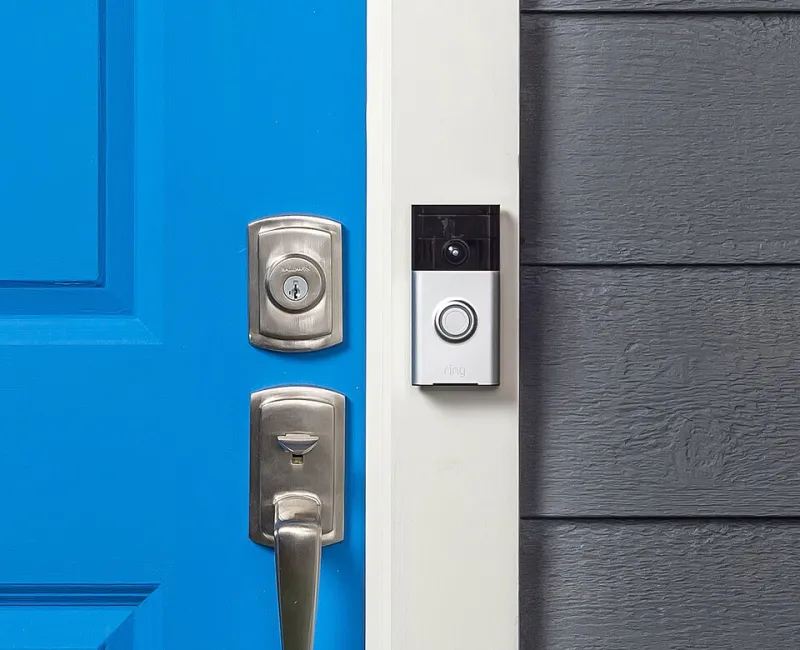
Photo: Ring, CC BY-SA 4.0, via Wikimedia Commons
The bit behind the bell
A video doorbell looks like a simple swap: remove the old push button, screw on a camera, enjoy a crisp view of the parcel courier. In plenty of UK homes, though, the real story is tucked away in a hallway cupboard, beside the consumer unit or inside the old chime box. That small transformer was sized for a ding-dong, not for a camera, Wi-Fi radio and night vision. It is the front-door power handshake, and it is worth checking before anything gets mounted.
A tired or undersized transformer does not always fail dramatically. More often, the doorbell drops offline, the chime buzzes, the camera reboots when someone presses the button, or the transformer runs warmer than it should. None of that is smart-home bliss. The good news is that a few sensible checks will tell you whether you are in plug-and-play territory or whether the supply needs a proper upgrade.
Wired or battery: pick the trade-off
Wired video doorbells use the existing bell wiring to draw power. That sounds tidy because there is no battery to charge, but it only works if the transformer, wiring and chime are compatible with the new device. The reward is a doorbell that stays powered day to day. The catch is that the old supply may not have the muscle for a modern camera.
Battery video doorbells avoid the transformer question altogether. They are easier to fit, especially in rentals or homes with no useful bell wiring, but they need charging. In a cold British winter, battery life can take a hit, and a doorbell that needs a recharge every few weeks is not everyone's idea of convenience. Some battery models can also be wired to an existing chime, so the line between the two types is not always perfectly clean.
If you are renting, check with the landlord before changing the doorbell or touching fixed wiring. If the property has an old chime and you want to keep it working, check compatibility before buying. A video doorbell that ignores the indoor chime can be a surprising downgrade for anyone upstairs.
Voltage and VA without the fog
Doorbell transformers are usually labelled with an output voltage and a VA rating. The voltage might be 8V, 12V, 16V or 24V AC. The VA rating is roughly the amount of power the transformer can supply; with simple numbers, volts multiplied by amps gives you VA. An 8V transformer rated at 1A is about 8VA. A video doorbell may ask for a specific voltage range and a minimum VA that is higher than the old chime ever needed.
This is where the 'it worked for the old bell' argument falls over. A basic push button and solenoid chime ask very little. A camera with a Wi-Fi connection, motion detection and infrared LEDs asks more. Thin bell wire can also cause voltage drop over a long run, so the transformer might be adequate on paper but the doorbell still struggles at the front door.
Check the doorbell manufacturer's instructions, then check the transformer label. If the label is unreadable, do not guess. Do not assume a 12V transformer is automatically fine because the doorbell mentions 12V; the VA rating and AC/DC requirements matter too. Feeding the wrong supply to a device is a quick way to shorten its life or void the warranty.
Chime compatibility and the bypass question
Many wired video doorbells need a power module, resistor or bypass fitted at the chime. This is not optional decoration. It helps the doorbell draw enough power without making the chime hum, buzz or ring at random. Mechanical chimes and digital chimes behave differently, and some video doorbells support one type more readily than the other.
If the chime starts buzzing after installation, treat it as a symptom rather than a quirk. It may point to an undersized transformer, incorrect wiring or a missing power module. Do not simply leave it humming in the hallway and hope it settles down. Doorbell circuits are low voltage, but they are still part of the home's electrical system and deserve proper attention.
Safe checks before you mount anything
Start by isolating the relevant circuit at the consumer unit and proving it dead with a suitable tester. Even low-voltage bell circuits can be linked to mains equipment, and the transformer itself may sit near live terminals. If you are not confident with safe isolation, stop and bring in a competent electrician.
Next, identify the transformer and read its label. Check the existing chime type and whether the doorbell kit includes a power module. Look at the bell wire for damage, corrosion or DIY joins. Think about Wi-Fi strength at the front door, because a beautifully powered doorbell with a weak signal is still a frustration. Check the mounting height and the surface; brick, render and uPVC need different fixings, and you do not want to drill into a cable or pipe.
Also consider the age of the installation. An old transformer in a cramped enclosure may have been fine for a chime, but a replacement needs to be suitable for the job and properly enclosed. Do not squeeze a larger transformer into a small box and hope the heat disappears. Ventilation and enclosure ratings matter.
The 'just swap the transformer' trap
Replacing a doorbell transformer is not always a simple like-for-like job. The new transformer must match the doorbell's requirements, be suitable for the enclosure, and be installed safely. In England and Wales, some electrical work is notifiable under Part P; Scotland and Northern Ireland have their own rules. Even where a job is not notifiable, safe isolation, correct connections and testing still matter.
Avoid the temptation to use whatever power supply is rattling around in the shed. A laptop charger, an old router supply or a random DC adapter is not a doorbell transformer just because the plug fits. Mains voltage should never be run to a doorbell unless the device is specifically designed for it.
A simple decision path
If you choose a battery doorbell and you are happy to charge it, mounting and Wi-Fi setup may be all you need. If you want a wired doorbell, read the manual first, check the transformer label and confirm the chime compatibility. If the voltage, VA and wiring all line up, you can proceed carefully. If anything is unclear, ask an electrician to check the supply or upgrade the transformer. It is usually cheaper than replacing a doorbell that was never given the power it needed.
The front door is a harsh little environment: cold, damp, bright sun and the occasional overenthusiastic parcel throw. A video doorbell needs a supply that can cope with all of that. The old chime transformer is not a mysterious box to ignore. Check it, respect it, and let the smart bell do its job without a meltdown in the hallway.