Aim the Beam, Not the Blame: Outdoor Security Lighting That Keeps the Peace
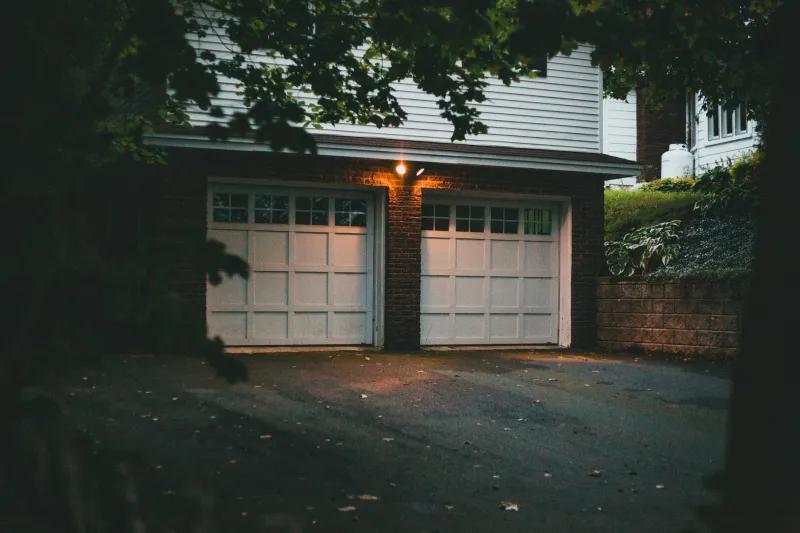
The first really dark evening of 2026 tends to arrive with a bang: a new floodlight, a quick drill, and a vague hope that the PIR knows what it’s doing. By the time the festive season is in full swing, that same light can be firing at foxes, washing out a neighbour’s kitchen, and adding a quiet but steady draw to the electricity bill. Every winter we see the same spike in outdoor lighting callouts — not because the fittings are bad, but because the plan was skipped.
Security lighting is one of those jobs where a little thought goes a long way. You want useful light where you need it, when you need it, without turning the street into a stage. Here’s how to get the balance right.
Start with the job, not the fixture
Before you buy anything, walk outside and work out what the light is actually for. Seeing a keyhole? Lighting a path to the bins? Making a rear door less appealing to an opportunist? Those are different jobs and they don’t all need the same fitting.
A common mistake is trying to light the whole garden with one powerful floodlight. That usually means the light is mounted high, aimed wide, and bright enough to spill over boundaries. A better approach is to use several smaller, well-aimed fittings: a low-level bulkhead by the back door, a narrow beam over the drive, a small PIR light near the side gate. Less glare, better coverage, fewer complaints.
Think about where the light lands, not just where it comes from. If the beam hits a shiny door, a car windscreen or a neighbour’s upstairs window, it will feel much brighter than it is. Aim downward and keep the light on your side of the fence.
PIR placement: where motion should mean something
Passive infrared sensors detect heat movement. They don’t understand context. A PIR pointed at the pavement will fire every time someone walks past. One aimed at a hedge will trigger when the wind moves the leaves. One facing a neighbour’s gate might as well be a doorbell for their comings and goings.
Mount PIRs at a sensible height — often around two to two and a half metres for domestic fittings — and angle them down toward the area you want to cover. Test the sensitivity at dusk, not in broad daylight, and adjust the range so it stops at your boundary. Many fittings have masking tabs or pet-friendly settings; use them. A PIR that fires at every cat is not security. It’s a disco.
Also check what moves near the sensor. Bins, hanging baskets, extractor outlets and boiler flues can all cause nuisance tripping. A light that switches on for no obvious reason quickly becomes the thing everyone ignores — including you.
Beam angles and glare: polite light is better light
A wide floodlight can be useful over a driveway, but only if it is aimed properly. Narrower beams are often better for paths and doorways because they put light where it is needed instead of across three gardens. Asymmetric fittings, shields and hoods can help direct the beam without blinding anyone standing next to it.
Colour temperature matters too. Very cool, blue-white light can feel harsh and glaring at night. A warmer white — around 3000K to 4000K — is usually easier on the eye and still perfectly clear for safety. You don’t need stadium-level lumens for a back door. A modest LED bulkhead can do more useful work than a huge floodlight pointed at the sky.
Here’s a simple test: stand at the edge of your property, or where a neighbour might stand, and look toward the fitting. If you can see the bare LED surface from a bedroom window, it needs adjusting. Light should land on the ground and the door, not in someone’s eyes.
The dusk-to-dawn draw
Dusk-to-dawn lighting feels reassuring: the house is never completely dark, and you don’t have to think about it. But it is not free. A photocell or timer left to run all night adds up, especially if you are still using older halogen fittings.
Do the maths before you add another fitting. Six 15W LED lights running for twelve hours a night use around 1.08 kWh per night — roughly 394 kWh across a year. That may be fine, but it is still a subscription. A single 300W halogen floodlight on the same schedule would be a different story entirely.
Use PIRs or a timer for the lights that only need to react, and reserve dusk-to-dawn operation for a small, efficient light where continuous illumination genuinely helps. If you are adding several fittings, check the circuit load and don’t assume the existing outdoor supply has unlimited spare capacity.
Cable routes and isolation
Outdoor lighting is still electrical work, and the cable route matters as much as the fitting. Before you drill, plan where the cable will run. Use cable suitable for outdoor use — steel wire armoured cable or UV-resistant conduit — and keep connections inside properly rated IP enclosures. Don’t run cables through door frames, window reveals or drainage points where they can be damaged or trap water.
New outdoor circuits often need notification under building regulations in England and Wales, so use a registered electrician for anything beyond a like-for-like replacement. They will also make sure the circuit has the right RCD protection and that the fittings are suitable for the location.
When working on the circuit, isolate at the consumer unit, lock it off if you can, and prove the circuit is dead before touching anything. A wall switch is not always the whole story. Test before you touch — every time.
Insurance, paperwork and the neighbour factor
Security lighting can be part of a sensible home security setup, but don’t assume it automatically changes your insurance premium. What insurers tend to care about is reasonable care, proper installation and a home that is maintained. Keep receipts, certificates and a few photos of the cable routes. If a new circuit is installed, keep the electrical certificate with your house paperwork. A neat, documented job is much easier to defend than a mystery cable disappearing into a wall.
And speak to your neighbours before you fit anything ambitious. A quick chat about where the light will point can save months of silent resentment. If your light reaches their window, adjust it. If it fires at their car, mask the sensor. Good security lighting should make your home feel safer without making next door feel watched.
A quick pre-winter checklist
- Aim fittings down and keep beams inside your boundary.
- Set PIR range and sensitivity at dusk, then recheck after a week.
- Use warm-white LEDs and avoid unnecessary all-night operation.
- Check IP ratings, cable routes and RCD protection.
- Isolate and test before any maintenance.
- Keep certificates and receipts together.
- If a neighbour mentions glare, treat it as useful feedback, not a nuisance.
Light the path, not the postcode. Done properly, outdoor security lighting is a quiet, useful part of a safe home — and the only thing it should switch on is a sense of reassurance.